Reduced ownership ambiguity by ~80% through role-based governance.
0→1 B2B product for a real estate platform with multiple seller roles — agents, account owners, and admins — each needing different levels of access, control, and visibility.
Project Scope
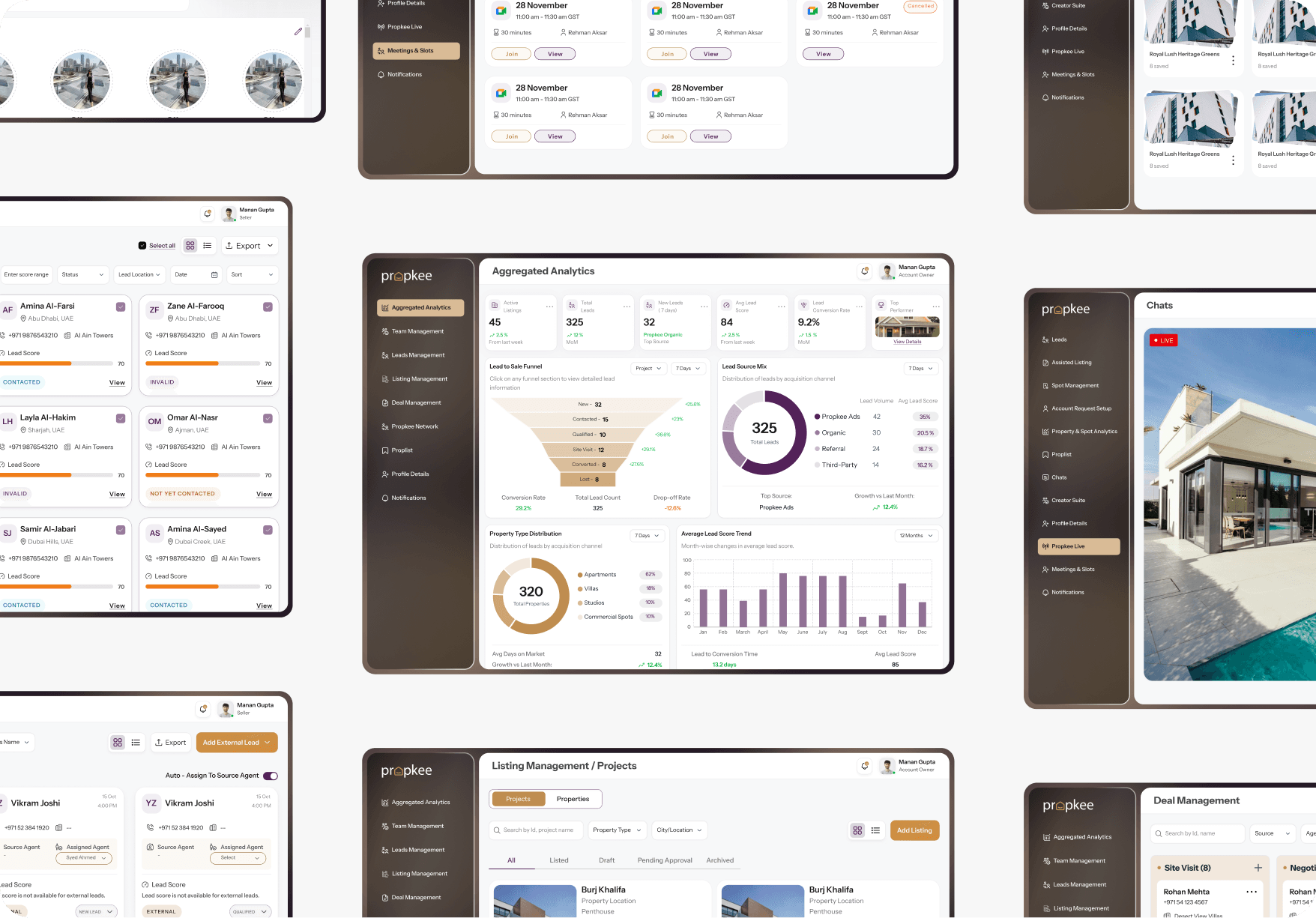
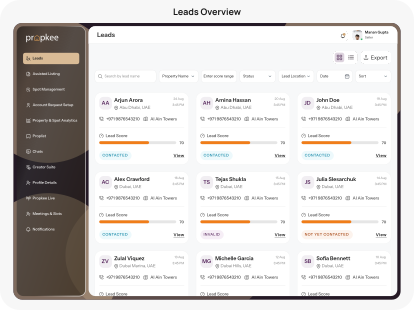
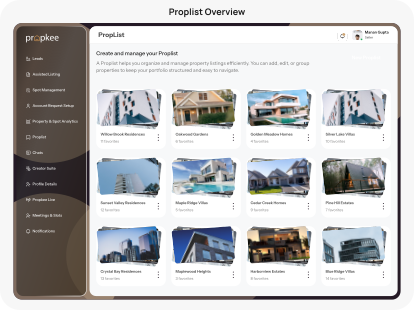
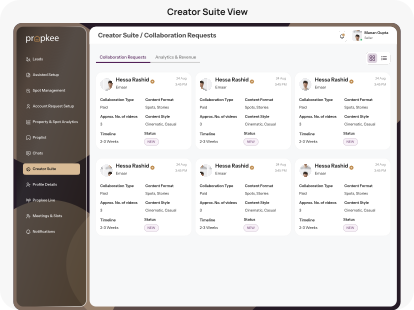
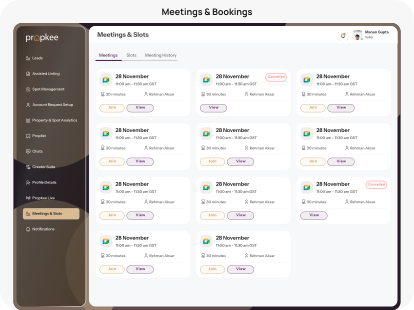
Designed the end-to-end Propkee product ecosystem across customer-facing and internal experiences.
Landing page
Seller Panel
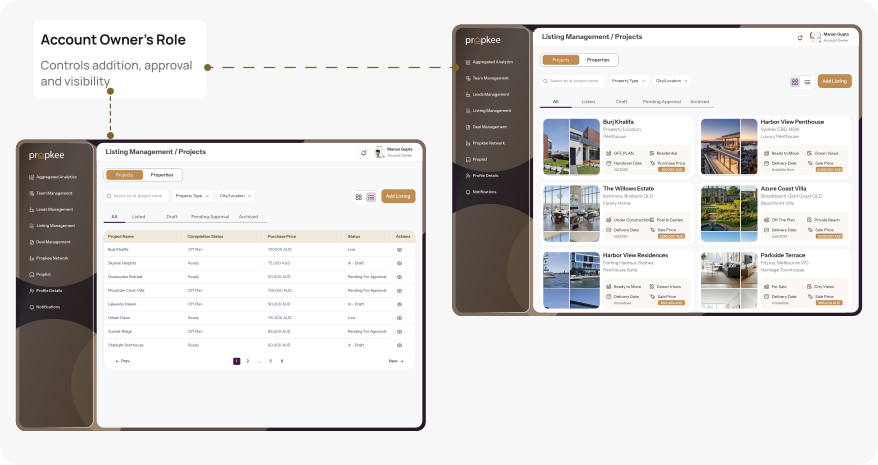
Account Owner Workspace
Admin Workspace
While this project spanned multiple products, this case study focuses on the governance system that connected them all.
The Situation
The system didn’t start with structure — it evolved into one.
Propkee initially approached us to design an admin panel — a contained brief with a general sense of the product and a few features to start with.
As clients came onboard, the scope expanded: a Seller Panel MVP covering lead management and analytics, then a much larger requirement — multiple roles, a role matrix, responsibilities that were partially defined but not fully worked out.
The clients had identified the roles. What wasn’t clear yet was how those roles should interact, what each one could and couldn’t do, and how the system should hold together as it scaled. That’s where the real work started.
As the ecosystem scaled, the gaps became visible:
Ownership wasn’t clearly defined
Permissions were inconsistent
Lead and listing control were unclear
This led to operational breakdowns:
Multiple agents handling the same leads
Listings without clear ownership
Confusion around critical actions
The challenge wasn’t improving screens.
It was defining how the system should work.
Impact
Defined governance for a growing seller ecosystem
~80%
Fewer Ownership Conflicts
Defined ownership reduced ambiguity across teams and listings.
~70%
Faster team administration
Simplified onboarding, permissions, and team changes.
~60%
Faster Lead Allocation
Centralized routing reduced manual coordination before leads reached agents.
Metrics estimated from client-reported coordination overhead before and after the governance model was introduced.
Core Decision
Authority needed to be defined before features scaled
As the system expanded into the Account Owner layer, the clients brought a starting role matrix. But a role list isn’t a governance model — it doesn’t tell you who controls what, where decisions escalate, or how the system stays stable when teams change.
I pushed to start with information architecture before any screens. I used their matrix as a reference, proposed how the roles should interact and what responsibilities should sit at each level, and worked through that structure with stakeholders before any interface decisions were made.
That conversation shaped what the product actually became — some responsibilities were reassigned, billing was scoped out, and compliance was handled separately by the client. The final architecture came out of that process, not directly from the original matrix.
Instead of building isolated flows, I structured a clear hierarchy of control:
Super Admin
Full Control
Account Owner
Organization Control
Admin
Operational Control
Viewer
Read Only
Agent
Execution only
Super Admin
Full Control
Account Owner
Organization Control
Admin
Operational Control
Agent
Execution only
Viewer
Read Only
Execution flowed downward
Control stayed with Account Owners
This shifted the system from flexible access → controlled governance.
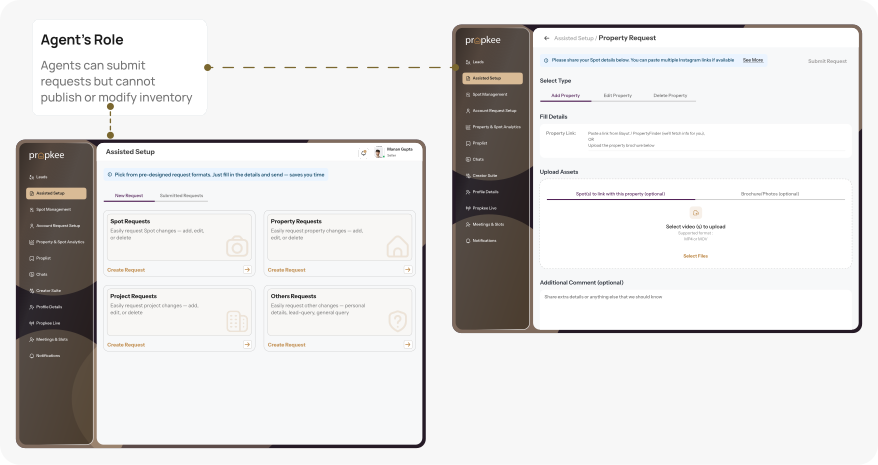
Agents were intentionally restricted
They could operate workflows
But could not control system-level actions
Sensitive actions — billing, ownership, lead assignment, listing control — were restricted upward.
Ensured the system could scale without losing control.
Permission Model
More flexibility created more risk
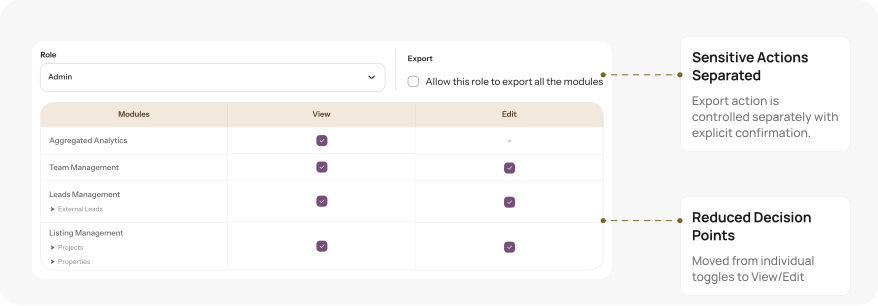
The first instinct — mine and the client’s — was maximum granularity: View • Edit • Delete • Assign • Export for every role.
But this led to:
High cognitive load
Risk of incorrect setup
Confusion around access boundaries
More surface control created more room for error and users couldn’t clearly understand what they could or couldn’t do.
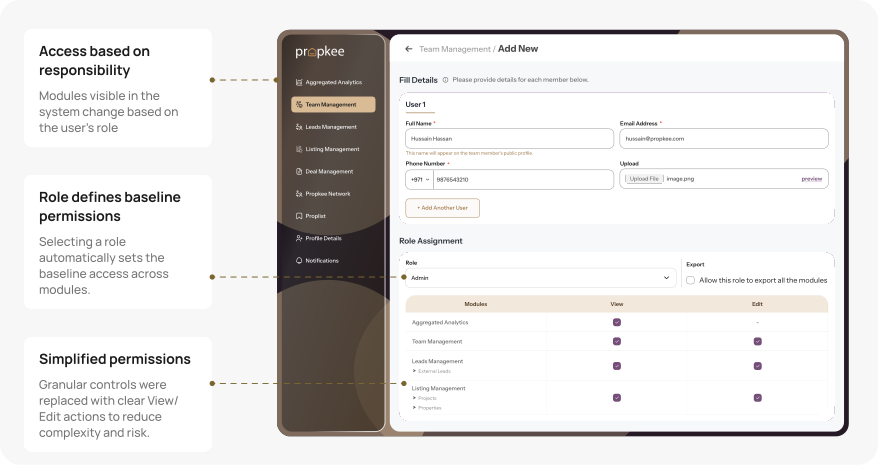
We simplified to View / Edit, and embedded real control into:
Role inheritance
Ownership logic
Confirmation layers
Restricted reassignment
Users saw less, but the system controlled more
Reducing visible complexity improved trust and safety.
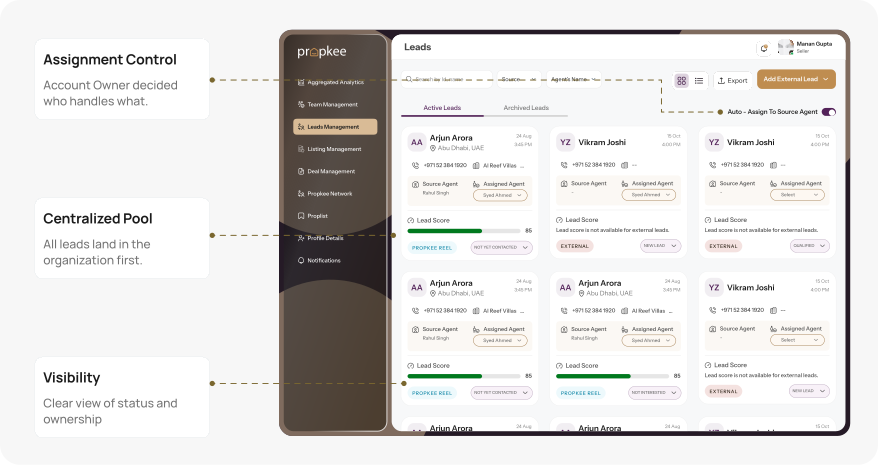
Instead of direct agent ownership the flow went like: Lead → Organization → Assigned Agent
Control sat with the organization
Account Owners handled assignment and redistribution
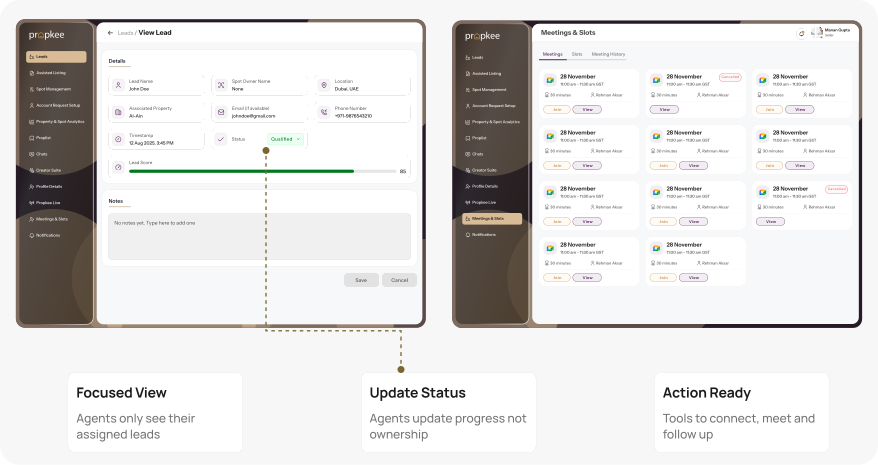
Agents worked only on assigned leads
Agents could:
View leads
Update status
Handle meetings and bookings
Execution stayed with agents. Control stayed centralized.
Built for team changes
If an agent left:
Leads reverted automatically to the organization
Ownership remained stable and traceable
Team Management
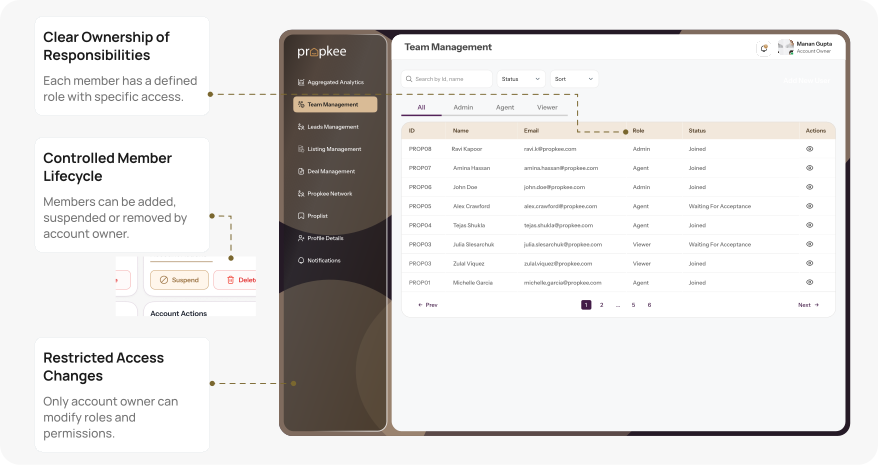
Team control was centralized, not distributed
Account Owner:
Managed team members
Defined roles and permissions
Controlled access levels
Agents:
Had no control over team structure
Operated within assigned permissions
Prevented role misuse and access escalation
Ensured permissions couldn’t be escalated accidentally.
Seller Panel
Governance started with the people using it every day.
While administrators governed the platform, agents needed a focused workspace to execute their daily tasks without unnecessary complexity.
The Seller Panel allowed agents to:
View assigned leads
Schedule meetings and site visits
Track bookings and follow-ups
Submit property listings for approval
Host Live Property Showcases & Project Launches
Instead of exposing organizational controls, the experience focused on helping agents complete work efficiently while keeping governance intact.
Agents could execute work, but organizational control remained with Account Owners.
Analytics
Two views, two decisions
Analytics wasn’t a single dashboard. The information each role needed to make decisions was different, so the views were designed separately.
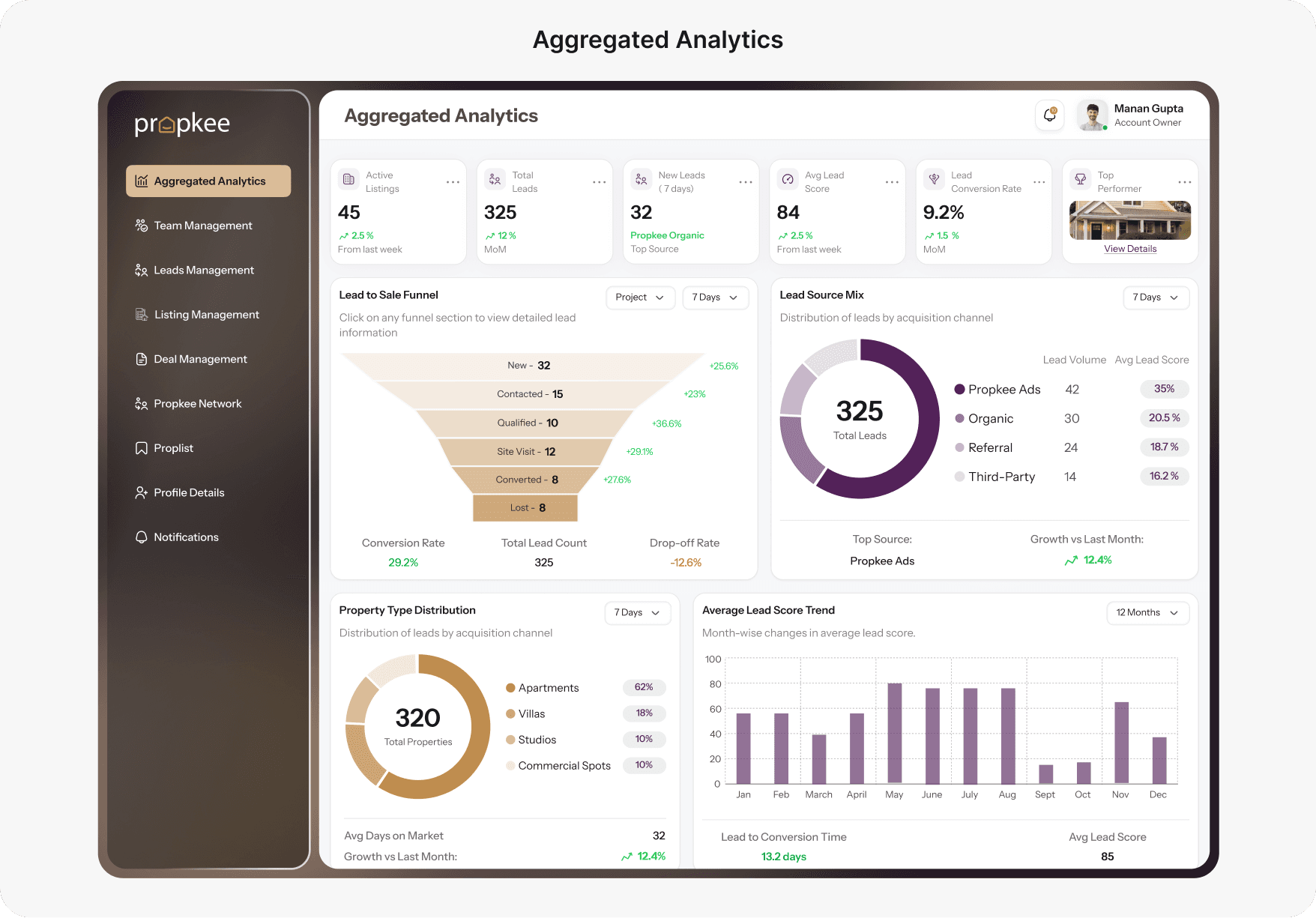
Account Owner — Aggregated Analytics
A cross-role operational view: active listings, total leads, lead-to-sale funnel, lead source mix, property type distribution, team performance summary, top performing properties, inactive listing alerts, and an agent leaderboard. Built for someone managing the business, not working individual leads. Every chart is filterable by project and time range — the Account Owner can drill from org-wide trends down to specific assets or agents.
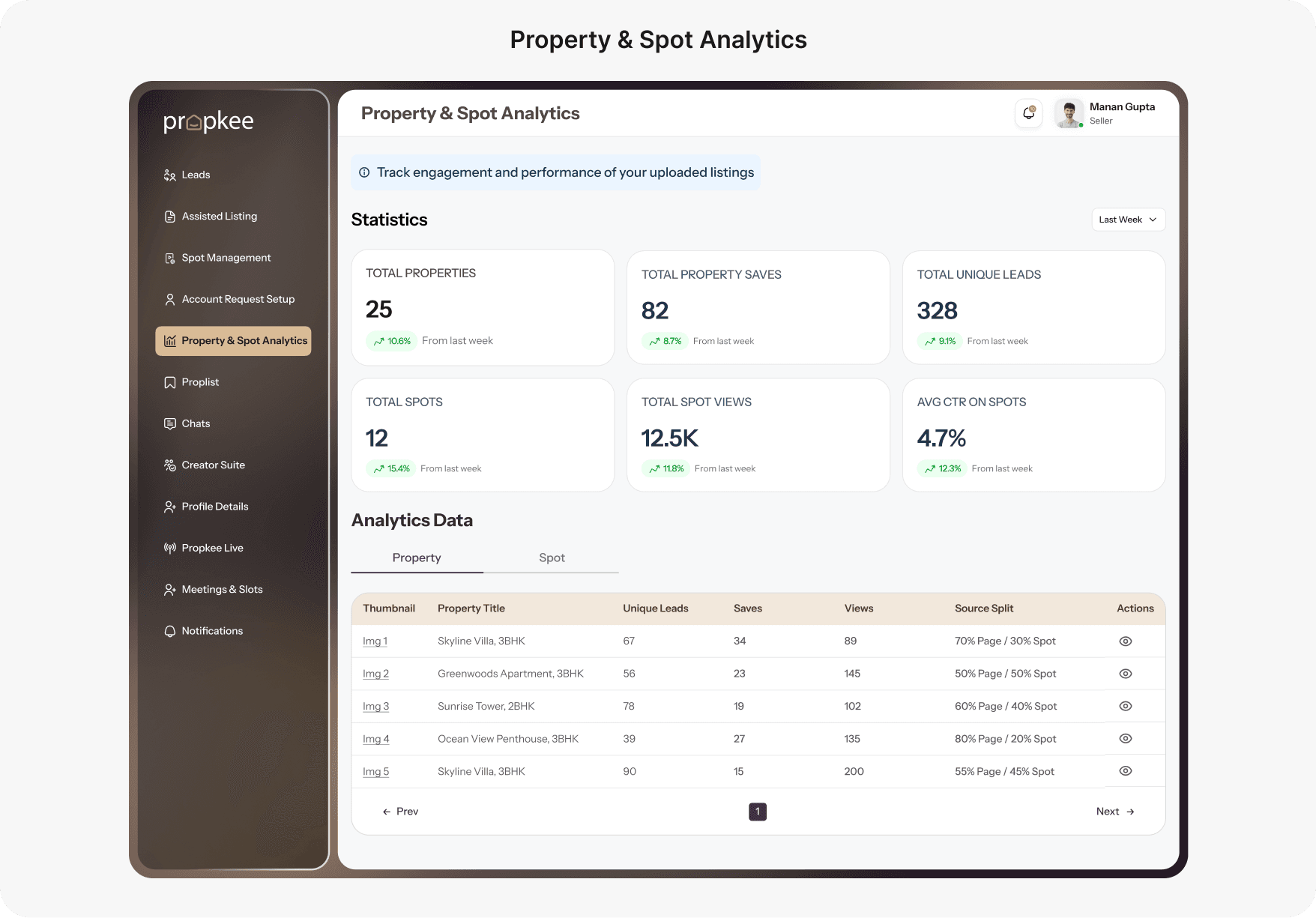
Seller — Property & Spot Analytics
Scoped to the agent’s own listings: total properties, saves, unique leads, spot views, and CTR. A per-property breakdown table shows where leads are coming from (page vs. spot split) so agents can see which listings are performing. No org-wide data — agents see only what’s relevant to their own work.
The split reinforced the governance model: visibility matched authority. Agents got execution-level data. Account Owners got the operational picture.
System Resilience
Designed for change, not stability
The system needed to handle:
Role changes
Team restructuring
Compliance requirements
Built safeguards into the system
Audit logs (who did what)
Ownership reversion logic
Restricted critical actions
Compliance moderation layers
The system remained stable even as the organization evolved.
Signing Off!
Key takeaways
This project involved navigating ambiguity, evolving requirements, and defining structure as the system scaled.
What this project taught me
The client came with a role matrix. I came with questions about how it should actually work.
The most useful thing I did on this project wasn’t designing the screens — it was insisting we define responsibilities before we touched the UI. Complex multi-role products break when the system logic is unclear, and no amount of good interface design fixes that.
If I were approaching a project like this again, I’d push for that IA-first conversation even earlier — and make the role interaction model something the client signs off on explicitly, not just something discussed in passing.
Systems Before Screens
Defining authority, ownership, and flow aligned stakeholders before UI decisions
This project reinforced my approach: solve for systems first — interfaces follow.