Back to work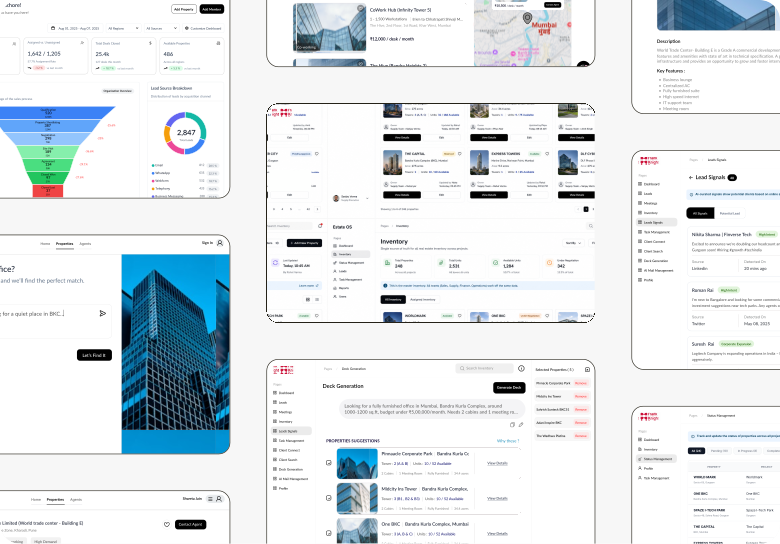

Knight Frank · 2025
Reduced sales conflicts by designing a centralized inventory ownership system for real estate teams
Designed for real estate brokers managing shared inventory across multiple regions.
Background
They asked for dashboards. What they actually needed was clarity.
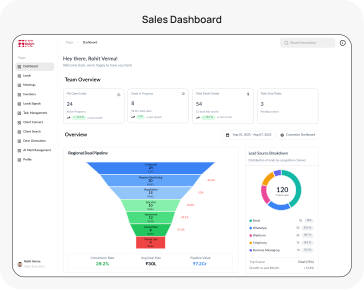
The initial ask was to design dashboards for sales, supply, and admin teams.
As discussions progressed, it became clear the real issue wasn’t dashboards, but how inventory was being managed across teams.
The Real Shift
Ownership was the real problem
Inventory silos, overlapping sales outreach, and limited visibility all pointed to one gap:
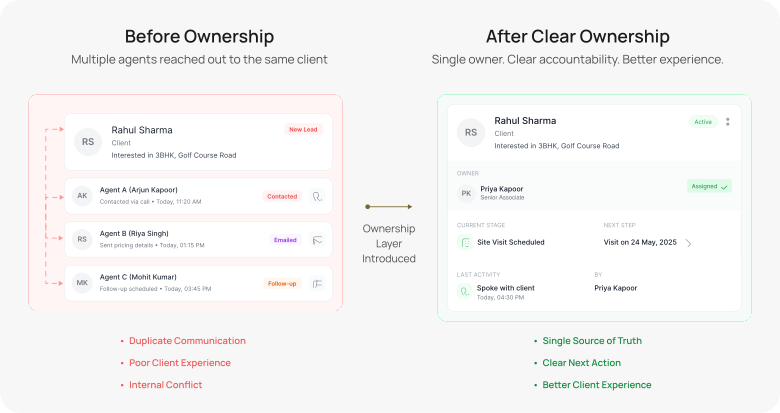
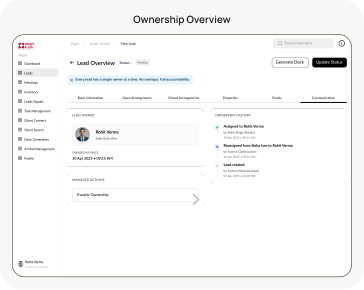
No clear ownership meant multiple agents contacted the same client, causing internal conflicts and poor client experience
This shifted the problem from UI design to system design.
Impact
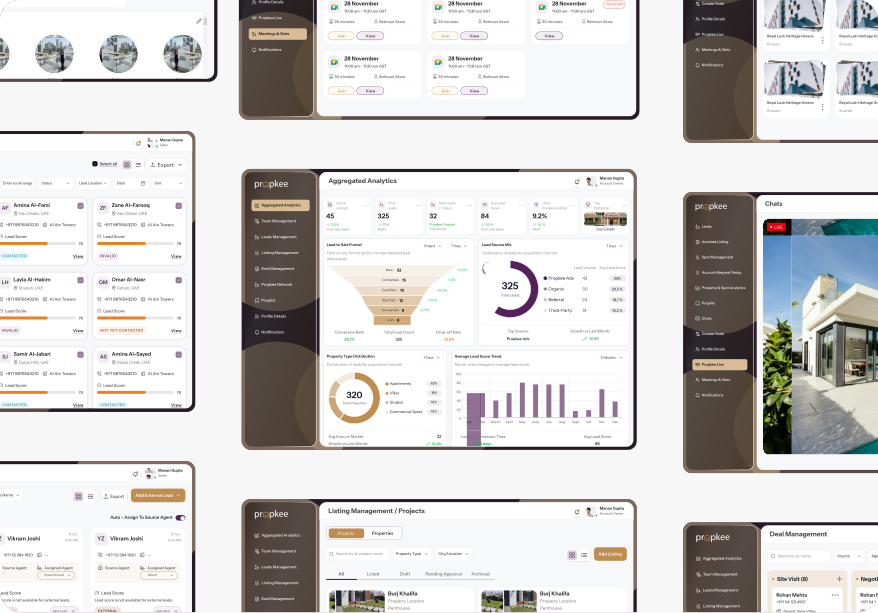
Defined a single source of truth for commercial real estate operations
Eliminated Duplicate Outreach
Single lead ownership per sales executive
Increased Inventory Visibility
One centralized source of truth across teams
Structured Accountability Across Roles
Ownership, visibility, and control were clearly defined
How I Approached The Problem
I treated inventory as a system, not a screen
Instead of designing dashboards in isolation, I stepped back and asked:
- Who owns inventory?
- Who owns leads?
- Who gets visibility, and when?
Core Decision 1
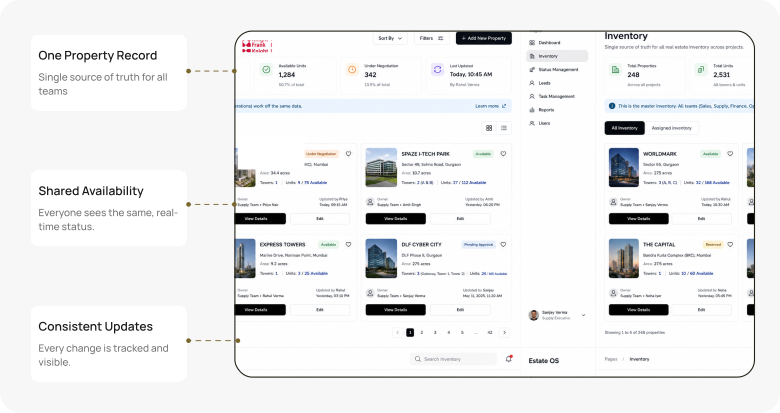
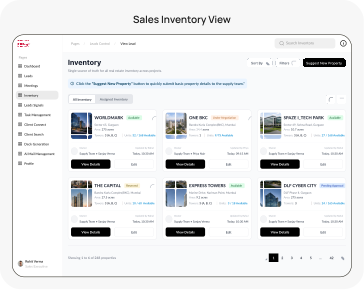
Inventory became the single source of truth
- All teams worked off the same inventory
- Eliminated conflicting inventory states across teams
- Availability and ownership stayed consistent
Ensured consistency and reduced coordination overhead
Made dependencies explicit
Required early agreement on ownership rules
Core Decision 2
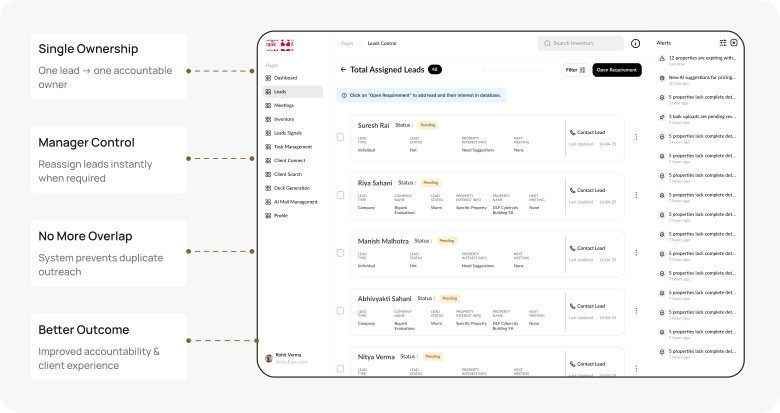
Lead ownership was mandatory, not optional
- One lead → one sales
- Managers could reassign when required.
- Sales overlap was no longer possible by default
Eliminated duplicate client outreach by enforcing single ownership
Improved accountability and client experience
Core Decision 3
Visibility scaled with responsibility
- Aligned visibility with responsibility, reducing unnecessary system noise
- Scaled system without breaking ownership rules
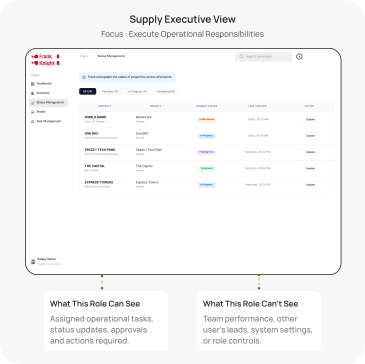
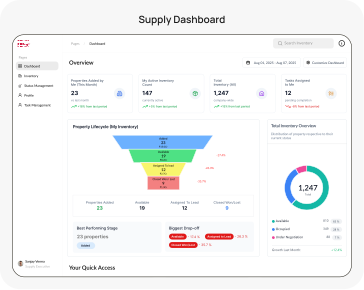
Supply Team — Inventory Ownership
Full visibility into properties & inventory. No access to leads or other teams.
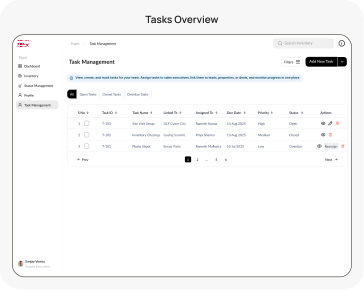
Sales Team — Assigned Workflows Only
Access to assigned leads, clients, meetings and tasks.
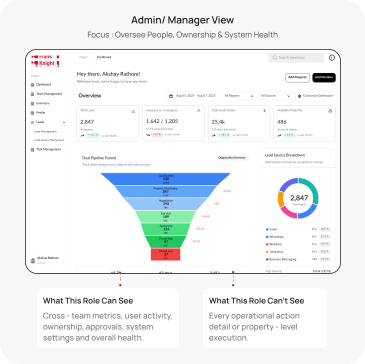
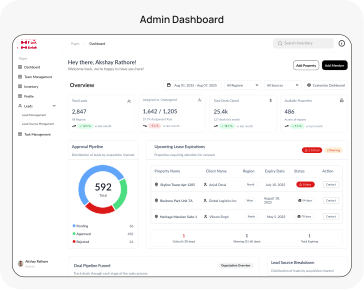
Managers — Team-Level Oversight
View team performance, leads, inventory, approvals and reports.
Admins — System-Wide Control
Complete platform visibility, user roles, settings and audit logs.
Exploring AI
AI was introduced only after system clarity — to reduce operational load, not define workflows
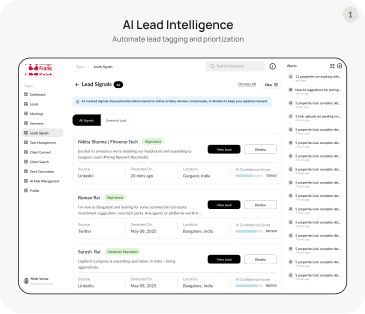
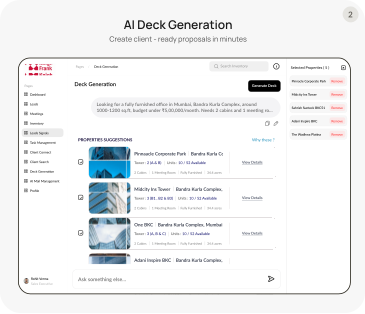
Once ownership and workflows were clear, I explored where AI could meaningfully reduce repetitive work—especially for sales and admin teams.
Used AI to:
- Automate lead tagging and categorization
- Assist reassignment workflows
- Reduce repetitive admin effort
Impact: Sales and admin teams saved 8-10 hrs/week on repetitive tasks, improved response time, and focused more on high-value activities.
Sales Experience
Designing sales around ownership, not volume
Optimized for:
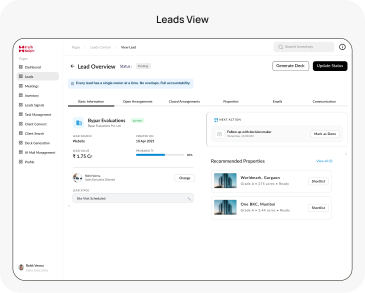
- Single ownership per lead
- Faster action
- Zero overlap
Read-only inventory view
One owner per lead
Sales see only what they own
Clear next action, no guessing
Sales operated on ownership, not guesswork
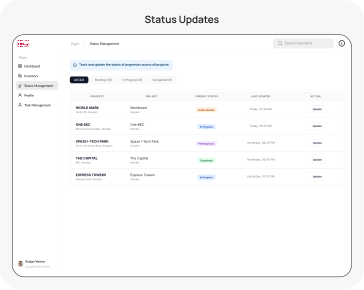
Supply Experience
Supply managed inventory — not sales pressure
Optimized for:
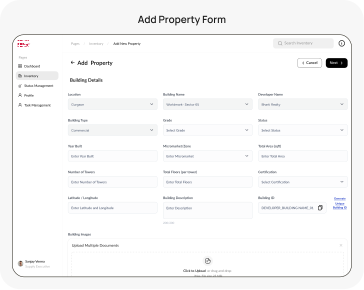
- Structured inventory input
- Controlled updates
- Higher data accuracy
Structured inventory entry
Availability & status updates
Supply see only what they own
Controlled tasks, fewer errors
Clean inventory ensured downstream reliability.
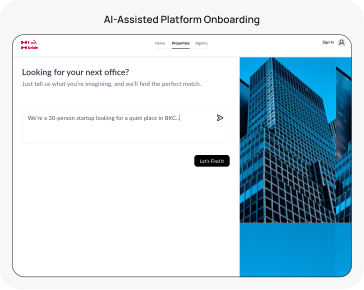
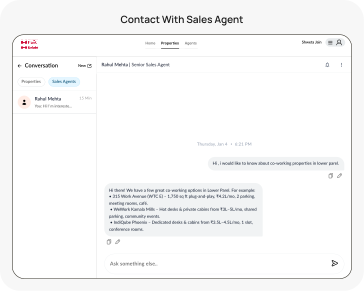
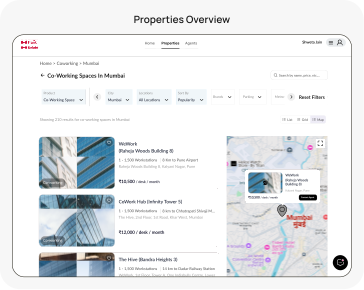
Client-Facing Experience
Clients saw clarity, not internal complexity
Optimized for:
- Clear property data
- Direct contact mapping
AI-assisted intent capture
Direct contact with sales team
Accurate availability & property details
Clear information, no ambiguity
Clarity in system translated into trust for users.
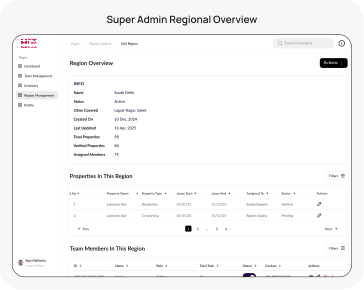
Scalability Considerations
Designed to scale beyond day-to-day operations
Inventory, users, and approvals at a state level
Access control and visibility across regions
These roles ensured the system could scale across teams and regions without breaking ownership rules.
Signing Off!
Key takeaways
This project involved navigating ambiguity, evolving requirements, and aligning with stakeholders need.
Clarity Reduces Complexity
Defining ownership and visibility simplified decisions more than adding features ever could.
AI Should Remove Friction
AI added value when it reduced steps and effort—not when it tried to replace judgment.
System Thinking Aligned Stakeholders Before Anything Was Built
Even without final UI or development, the system thinking helped align stakeholders and direction.
This project reinforced my approach: solve for systems first — interfaces follow.